
Bike Rental Software: Features, Models & Selection Checklist
Anyone planning a bike sharing or bike rental service quickly faces the same question: which software will run it? Your bike rental software determines how users find and book bikes, how billing works and how much effort day-to-day operations take. This guide explains which features good bike sharing software should offer, which models exist and what to look for when choosing a platform.
What is bike rental software?
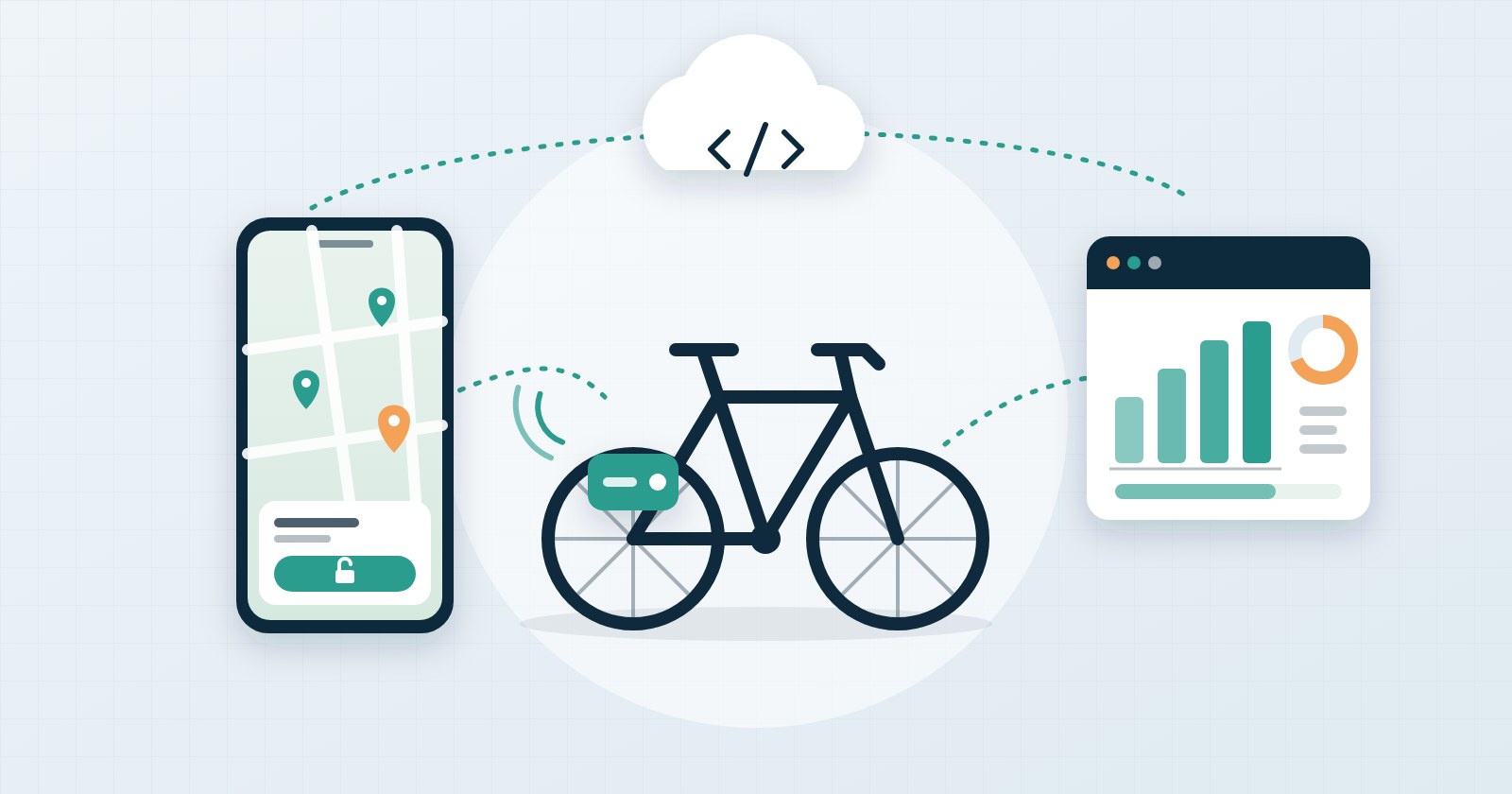
Bike rental software – often called bike sharing software or a bike sharing platform – is the digital backbone of a rental system. It connects three layers:
- The user app: registration, search, booking, unlocking and payment via smartphone.
- The operator portal: fleet overview, tariffs, user management, maintenance and reporting.
- The hardware: smart locks and, where needed, GPS modules on the bikes, controlled via Bluetooth or cellular connection.
Only when these three layers work together smoothly can a rental service run without key handovers, paper forms or staff on site. We explain the technical details in our article How bike sharing works.
Key features of bike sharing software
For users
- Fast registration, ideally with automated verification
- A map showing all available bikes, e-bikes or cargo bikes
- Real-time booking and reservation
- Unlocking via app – the smartphone becomes the digital key
- Automatic billing, e.g. per minute, per day or by subscription
- Damage reporting directly from the app
For operators
- Real-time fleet management: location, status and utilization of every bike
- Virtual stations and geofencing for pick-up and return
- Tariff and user group management, e.g. for employees, guests or residents
- Maintenance and damage management, including battery level and hardware error alerts
- Reporting on usage, revenue and utilization
- Interfaces to accounting, payment providers or mobility platforms
Three ways to get the right software
There are basically three ways to source software for a rental system. Which one fits depends mainly on your target group, your budget and your own IT resources.
| Model | Suitable for | Advantages | Keep in mind |
|---|---|---|---|
| Ready-made platform (SaaS) | Companies, municipalities, hotels, residential areas | Fast launch, continuous development, no in-house developers needed | Ongoing license or usage fees, feature set defined by the provider |
| White-label solution | Mobility providers with their own brand | App in your own corporate design, proven processes in the background | Higher setup effort, tied to one platform provider |
| In-house development | Operators with their own software or special requirements | Full control over features, data and user experience | Development and maintenance effort, requires open hardware interfaces |
For most operators, a ready-made platform is the fastest route. If you already run your own software – such as a mobility app or booking system – it is better to connect the hardware directly. This requires a lock with an open interface, such as the I LOCK IT API with Bluetooth and REST interfaces.
What to look for when choosing
1. Target group and use case
Public bike sharing in a city has different requirements than a corporate bike pool or a hotel rental. Companies need user groups, logbooks and approvals; public services need payment options, tariff models and clear user guidance. Check whether the provider has references in your use case.
2. Compatible hardware
Software and lock must fit together. Make sure the platform supports your preferred smart locks and decide whether Bluetooth is enough or a cellular connection is needed. Bluetooth locks are cost-effective and energy-efficient because the user’s smartphone establishes the connection. Locks with GPS and cellular connectivity also deliver location data – for example in the event of an alarm, or permanently when connected to the e-bike battery.
3. Data protection and server location
A rental system processes personal, payment and location data. Ask about the server location, data processing agreement and deletion policy. EU servers and GDPR-compliant processing should be a given.
4. Scalability
Many projects start with just a few bikes and grow later. The software should scale with additional locations, vehicle types such as e-bikes or cargo bikes, and new user groups – without forcing you to switch platforms.
5. Interfaces and integration
Open interfaces make it easier to connect accounting, payment providers, employee ID cards or existing mobility apps. If you want to combine several providers, an open smart lock integration is especially important.
6. Cost model
Costs usually consist of a one-time setup fee, ongoing fees per vehicle or user and, in some cases, transaction fees. On top of that come the hardware and, for GPS locks, cellular costs. Always compare offers based on the total cost per vehicle per year – not just the license fee.
Hardware and software from a single source
With I SHARE IT, you don’t have to source the lock and the software separately. The I LOCK IT smart lock is compatible with the platforms of several experienced software partners – including solutions for corporate bike sharing, white-label apps for mobility providers and platforms for municipalities, residential areas and real estate. You choose the software that fits your project and launch without your own development.
You’ll find an overview of all partners and their focus areas on our bike sharing software & complete solution page. If you use your own software, connect I LOCK IT via the open API – with no license fee. GPS versions only incur a monthly usage fee for the cellular connection.
Frequently asked questions
How many bikes do I need for bike sharing software to pay off?
Some platforms can be used from a single bike. What matters is less the fleet size than the effort you would have without software: key handovers, manual bookings and billing take a lot of time even with just a few bikes.
Is a custom integration via a smart lock API worth it?
Yes, if you already run your own app or platform, or if the bike is part of a larger mobility offering. You avoid a second app for your users and keep all data in your system. Without your own software, a ready-made platform is usually faster and cheaper.
What should I look for when integrating a smart lock API?
Key points are complete documentation, encrypted communication with individual tokens, support for Bluetooth and cellular connections, and clear lock status messages (open, closed, alarm, battery level). Also check whether license fees apply per lock.
Do I need GPS in every bike?
Not necessarily. For non-public rental systems, such as on a company site, location data from the user’s app is often enough. For public, stationless services and e-bike fleets, a GPS bike lock makes sense.
Conclusion
The right bike rental software depends on your target group, existing IT and growth plans. Pay attention to compatible hardware, data protection, interfaces and the total cost per vehicle. If you’d like to know which combination of smart lock and software suits your project, we’re happy to advise you – get in touch. For an overview of all steps up to launch, read our guide Start a bike sharing system.


